
Avelor Harbor · The morning concept
Shape a slower waterfront morning
A morning can feel spacious before the day has properly begun. At Avelor Harbor, the idea starts with natural light, comfortable interiors and a sense of the waterfront nearby: a setting that invites you to notice what you need rather than hurry through a fixed routine.
Begin with light and room to pause
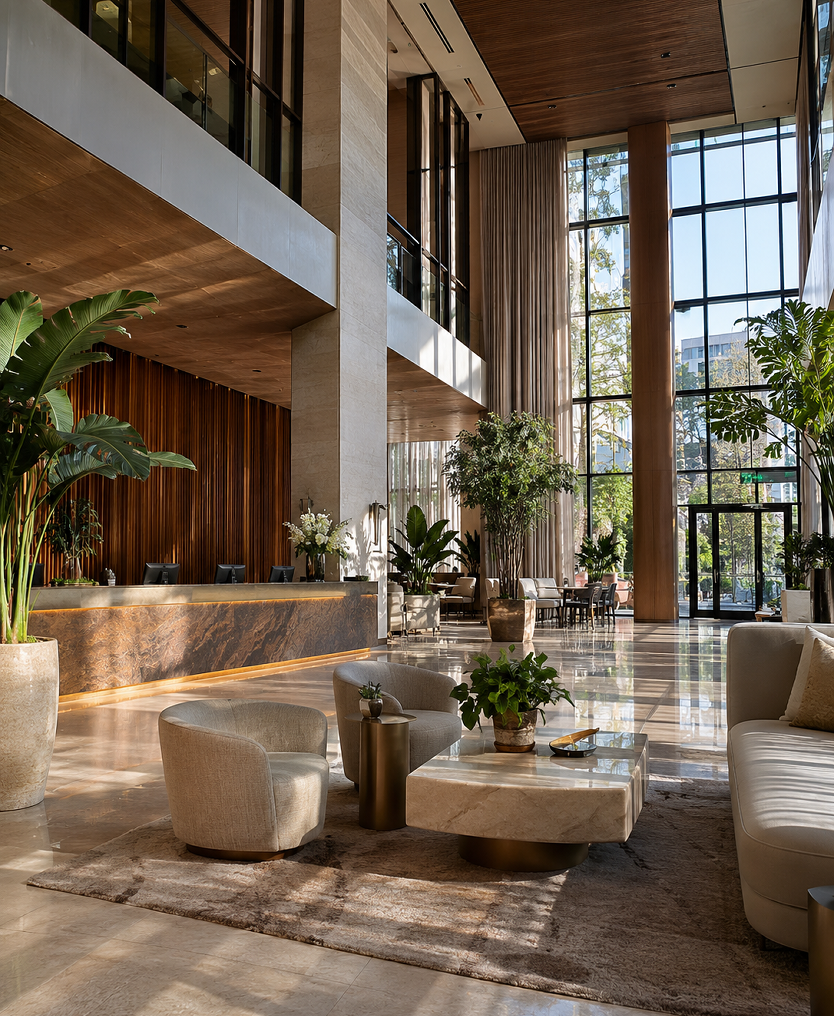
Tall windows change the feeling of a room without asking for attention. As daylight moves across an interior, colours and textures become easier to read, and the boundary between a quiet lounge and the waterfront mood outside feels less abrupt. The morning concept treats that natural light as part of the experience: not a spectacle, but a gentle orientation to the day.
Comfortable seating matters just as much as generous space. A quiet place to sit can make a room feel welcoming even when it is not large. A supportive chair, a small table within reach and enough space to settle with a coffee give a visitor permission to pause. The aim is not to fill every corner with activity, but to leave room for a slower moment.
A calm palette helps hold those details together. Soft, grounded tones allow daylight to remain the liveliest element, while warm materials bring a lounge into a more intimate scale. Together, light, seating and colour suggest a morning that unfolds at an individual pace rather than following a loud or crowded pattern.
Make breakfast a deliberate pause
Breakfast is often remembered through small choices: the first coffee, a pastry enjoyed slowly, or a seasonal option that feels connected to the moment. In this concept, coffee, artisan pastries and seasonal breakfast choices are central to the morning idea. They are prompts for an unhurried ritual, not a promise of a particular menu or service.
Consider how the setting affects the meal. A private seat offers a different kind of attention from a busy shared lounge. One visitor may value conversation and the gentle movement of other people; another may prefer a quieter corner and a little distance. Neither preference is more correct. The useful question is whether the space gives each person enough choice to enjoy breakfast in a way that feels comfortable.
There is also pleasure in leaving a margin around the meal. Without a timetable to complete, a cup can be savoured and a view can hold attention for a few minutes. A considered breakfast ritual need not be elaborate. Familiar food, a comfortable seat and a pause between waking and the day ahead can be enough to make a morning feel distinct.
Choose your own morning rhythm
When imagining a stay, begin with the conditions that help you feel at ease. Notice whether morning light is important, whether you seek quiet or a sense of shared activity, and what kind of seating lets you settle. Think, too, about proximity to communal spaces: being close can make it easy to join a lively room, while a more private setting can give the day a softer beginning.
These preferences can change from one day to another. A person who enjoys company over breakfast may still welcome a quiet first coffee. Someone who likes a bright room may also want a shaded seat later. A flexible idea of hospitality makes space for these shifts instead of treating one rhythm as the right one for everyone.
The waterfront morning is ultimately an invitation to pay attention: to the light in a room, the comfort of a chair, the pace of a meal and the distance between private and shared space. For another perspective on the concept, continue with Create an unhurried evening, or return to the Harbor Journal.